Head-to-Head: Acer Chromebook Plus 514 vs Asus Proart P16 H7606 2025 (Detailed Comparison)
Introduction
When choosing a new laptop, buyers often face a key decision: prioritize portability, battery life, and simplicity, or opt for raw power, color-accurate displays, and expandability. The Acer Chromebook Plus 514 and the Asus ProArt P16 H7606 (2025) represent two ends of that spectrum. The former is a modern Chromebook designed for web-first productivity and long battery life in a thin-and-light package; the latter is a 16-inch creative workstation built for professionals who need high-performance CPUs, dedicated graphics, and color fidelity for content creation.
This article offers a structured, practical comparison for real-world buyers: students, road warriors, creative professionals, and small-business owners. It covers design, displays, performance, battery life, ports and connectivity, software and ecosystem, thermals and noise, upgradability, value, and purchasing guidance so readers can make an informed choice based on how they work day-to-day.
Overview: Two Different Philosophies
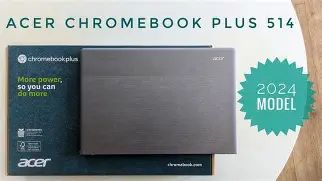
Acer Chromebook Plus 514 is aimed at users who live in the browser and want a reliable, fuss-free device. Chromebooks emphasize cloud workflows, fast boot times, and low maintenance thanks to ChromeOS. The Plus 514 line emphasizes a premium build and better-than-average displays for a Chromebook.
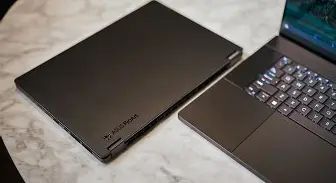
Asus ProArt P16 H7606 (2025) targets content creators and professionals who require powerful CPUs, optional discrete GPUs, and studio-grade displays. The ProArt family is known for accuracy-oriented screens, robust thermal designs, and software features tuned to creative pipelines.
Detailed Product Analysis
Design and Build Quality
The Acer Chromebook Plus 514 typically sports a compact 14-inch chassis with metal or metal-accented construction that feels premium for the price. Its smaller footprint and lighter weight make it comfortable to carry in a commuter bag or student backpack. Build decisions prioritize portability without sacrificing a stable hinge and a comfortable keyboard.
The Asus ProArt P16 H7606 is a larger, heavier machine—expected for a 16-inch workstation. The chassis is engineered for thermal performance and port density, often using magnesium-alloy or aluminum in higher trims. Its design is more utilitarian: thicker profile, robust hinge, and often a more substantial cooling solution to sustain higher CPU/GPU loads during long creative sessions.
Display
Display quality is a major differentiator. The Acer Chromebook Plus 514 typically offers high-resolution IPS or 2K-class panels that are bright enough for indoor and moderate outdoor use; color accuracy is good for general media and productivity, but it isn’t targeted at color-critical work.
The Asus ProArt P16 H7606’s display is purpose-built for creators. Expect larger 16-inch panels with high-resolution options (including OLED or mini-LED variants in many ProArt lines), wider color gamuts (wide DCI-P3 coverage), and factory-calibrated color profiles. This makes the ProArt a better choice for photo and video editing, color grading, and any work that demands accurate color reproduction.
Performance
Performance profiles diverge significantly. The Chromebook’s processor options and ChromeOS optimizations make the Plus 514 excellent for multitasking in web apps, document editing, light photo editing via web or Android apps, and video streaming. Its efficiency-focused design usually yields long battery life and cool operation under typical loads.
The ProArt P16 H7606 is built for sustained heavy workloads. Configurations commonly include high-core-count processors and discrete GPUs suitable for GPU-accelerated editing, 3D rendering, or compute-heavy tasks. Thermal design and power delivery are engineered to allow the CPU and GPU to run at higher sustained clocks than thin-and-light laptops.
Shop the latest Laptops & Computers picks on Amazon.
View Offers →Ports, Expandability, and Connectivity
Chromebooks like the Acer Chromebook Plus 514 provide the essentials: USB-C for charging and display output, a couple of USB-A ports, and a headphone jack. MicroSD card readers or one-touch sign-in options may appear depending on region. Upgradability is limited—RAM and storage are often soldered, and the ecosystem expects cloud storage.
The Asus ProArt P16 offers a richer selection: multiple full-size USB-A ports, several USB-C/Thunderbolt ports, HDMI, an SD card reader (often full‑size, UHS-II capable), and sometimes Ethernet via an adapter or dedicated jack. RAM and storage upgrades are generally more accessible, which matters for professionals who want to extend the machine’s lifespan.
Battery Life and Thermals
Battery life favors the Chromebook. With a focus on efficient hardware and ChromeOS power management, the Plus 514 is suited to all-day use for research, writing, and meetings. Thermals are conservative; the system remains cool under light to moderate loads.
The ProArt P16 prioritizes performance, so battery life is shorter under heavy workloads. However, when performing intensive tasks on battery, the ProArt will throttle to preserve thermals and power. When plugged in, the notebook can sustain peak performance thanks to a beefier cooling system, but users should not expect Chromebook-like all-day longevity under demanding use.
Software, Security, and Ecosystem
ChromeOS offers simplicity: fast updates, sandboxed apps, and integration with Google Workspace. For users who live i…Asus ships the ProArt P16 with Windows and often includes ProArt Creator Hub software for color profiles and performance tuning. Windows unlocks the full suite of professional applications (Adobe Creative Cloud, DaVinci Resolve, 3D tools), making it the sensible choice for creatives who rely on desktop-grade software.
Pros & Cons
Acer Chromebook Plus 514 — Pros & Cons
- Pros:
- Lightweight and highly portable for daily commuting and student use
- Excellent battery life for web-based workflows
- Fast, secure, and low-maintenance ChromeOS environment
- Premium-feeling build at a Chromebook price point
- Good value for users who primarily use cloud apps
- Cons:
- Limited offline and native professional application support
- Little to no upgradability for RAM and storage
- Not suitable for sustained heavy creative workloads or gaming
Asus ProArt P16 H7606 (2025) — Pros & Cons
- Pros:
- Large, color-accurate display ideal for photo and video professionals
- High-performance CPU and optional discrete GPU for demanding tasks
- Broad port selection and better upgradability
- Factory color calibration and creator-focused software tools
- Designed for sustained workloads with robust cooling
- Cons:
- Heavier and less convenient to carry daily
- Shorter battery life under intensive use
- Higher price, especially in top configurations
Quick Comparison Table
| Category | Acer Chromebook Plus 514 | Asus ProArt P16 H7606 (2025) |
|---|---|---|
| Target user | Students, commuters, web-first users | Creative professionals, photographers, video editors |
| Operating System | ChromeOS | Windows (Pro/Standard depending on configuration) |
| Screen size & type | ~14-inch IPS / 2K-class (varies by SKU) | 16-inch high-res OLED/mini-LED or IPS with wide color gamut |
| Performance | Efficiency-focused processors for web and light tasks | High-core CPUs and optional discrete GPUs for heavy workloads |
| Ports | USB-C, some USB-A, headphone jack (limited) | Multiple USB-A, Thunderbolt/USB-C, HDMI, SD card reader, Ethernet options |
| Battery life | Long for productivity/browsing | Moderate to short under load; reasonable on light tasks |
| Upgradability | Minimal to none (soldered RAM/storage common) | Moderate to good (user-accessible RAM/SSD in many models) |
| Weight & Portability | Lightweight and compact | Heavier and bulkier |
| Price bracket | Mid-range | Upper mid-range to premium depending on config |
| Best for | Daily productivity, students, travelers | Professional content creation, heavy multitasking, color-critical work |
Real-World Use Cases
To help ground the comparison, consider how each machine performs in typical scenarios:
- Student or research worker: The Chromebook excels. Fast boot, long battery life, and straightforward cloud sync mean fewer worries about storage, updates, or security. Lightweight construction makes all-day campus carry painless.
- Remote worker or frequent traveler: If work is mostly documents, video calls, and browser tabs, the Chromebook provides convenience and endurance. For occasional heavier tasks—running virtual machines or desktop CAD—Windows-based ProArt is more capable but less portable.
- Photographer or video editor: The ProArt P16 is the clear choice. Its color-accurate 16-inch panel, discrete GPU support, and expandability suit editing and color grading workflows that demand faithful previews and fast exports.
- Small business owner or developer: Choice depends on toolchain. Web developers, cloud admins, and business-application users can do well on ChromeOS, while software developers who need native Linux tooling, heavy compiles, or Windows-only apps will prefer the ProArt.
Buying Guide: How to Choose Between These Two
Making the right choice comes down to how the laptop will be used on a daily basis. Use the checklist below to match needs to features.
1. Define primary workflows
If most tasks happen in a browser or through web apps (Google Workspace, Microsoft 365 online, Slack, Google Meet), a Chromebook reduces friction and maintenance. If workflows rely on desktop-grade software (Photoshop, Premiere Pro, After Effects, DaVinci Resolve, 3D suites), pick the ProArt for compatibility and performance.
2. Prioritize display needs
Color-critical work benefits from calibrated, wide-gamut displays. If accurate color representation is essential—choose the ProArt. For casual photo edits and media consumption, the Chromebook’s display is usually adequate.
Find top-rated Laptops & Computers products at great prices.
Browse Now →3. Consider portability vs. power
Daily travelers or students benefit from lighter machines with longer battery life—point to the Chromebook. If the machine will mostly sit on a desk or be brought to client studios where power outlets are available, the ProArt’s heavier build is acceptable.
4. Look at connectivity and expandability
Check port types and the presence of an SD card reader if media ingestion is frequent. For future-proofing—RAM and storage upgrades are important. Buyers who want to extend lifespan should favor the ProArt if its configuration allows user-accessible upgrades.
5. Budget and total cost of ownership
Chromebooks often deliver excellent value up front and lower maintenance costs over time. Windows workstations can be more expensive initially, and powerful GPUs/CPUs add to the price—but they also deliver productivity gains for professionals that can offset the cost through faster project turnaround.
6. Software ecosystem and compatibility
Confirm that necessary applications run natively on the chosen platform. While many apps have web-based or Android equivalents, performance and feature parity vary. For production-level content work, Windows remains the safest option for broad compatibility.
Performance Tips and Practical Advice
- For Chromebook buyers: Check local storage and sign-in options. If offline work is required, verify that critical apps support offline mode. Consider configuration with higher RAM if many browser tabs are part of the workflow.
- For ProArt buyers: Prioritize CPU/GPU balance. For editing timelines and GPU-accelerated effects, a stronger GPU can be more beneficial than more CPU cores. Also, confirm the machine’s thermal profile—throttle behavior matters for long renders.
- Accessories: Creatives will value a colorimeter for occasional recalibration, a quality external storage solution for large files, and a compact dock for more ports when working from a desk. Students benefit from durable protective sleeves and a reliable cloud backup plan.
Final Verdict
Choosing between the Acer Chromebook Plus 514 and the Asus ProArt P16 H7606 (2025) is less about which is objectively better and more about which aligns with the buyer’s priorities.
For those whose days revolve around web apps, collaboration, document editing, and long stretches away from power sockets, the Acer Chromebook Plus 514 offers a sensible, efficient, and worry-free experience. It keeps distractions minimal and delivers the portability and battery life many students and mobile professionals value.
For professionals who demand color accuracy, high sustained performance, and the flexibility to run full-featured desktop applications, the Asus ProArt P16 H7606 is the more appropriate tool. It is a workstation for people whose work depends on precise displays, GPU acceleration, and the ability to upgrade and expand over time.
Ultimately, the right choice comes down to use case: choose the Chromebook for streamlined, cloud-first productivity and the ProArt for creative, performance-driven workflows that require professional-grade hardware and software compatibility.