Biggest Lg Ultragear 39Gs95Qe B Gaming Monitor Buying Mistakes (And How to Avoid Them)
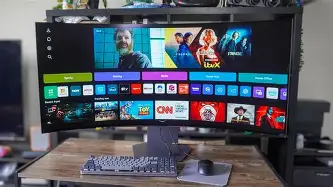
The LG UltraGear 39GS95QE-B has attracted attention for blending OLED-class contrast with ultrawide form factors and gaming-focused features. For buyers who prioritize immersive visuals and responsive gameplay, it represents a compelling option — but it is not without important trade-offs. This article outlines the most common buying mistakes people make when considering this model and explains practical ways to avoid them. The aim is to help gamers, content creators, and productivity-minded buyers make a better-informed purchase decision that matches real-world needs.
Introduction: Why buyers get tripped up
Monitors that push new panel types, aspect ratios, and refresh rates create a lot of excitement — and a lot of confusion. The LG UltraGear 39GS95QE-B sits at the intersection of several categories: high contrast panels, ultrawide screens, and gaming-grade responsiveness. Each of these brings benefits, but also caveats that often go unrecognized until after the monitor is in use. Common buyer mistakes stem from assumptions about compatibility, expected performance in specific games or workflows, ergonomic fit, and long-term maintenance. Understanding these pitfalls up front reduces buyer’s remorse and helps match purchase to use case.
Detailed product analysis
The LG UltraGear 39GS95QE-B targets users who want both visual fidelity and gaming performance in an ultrawide format. In broad terms, the monitor combines an ultra-wide display size with a panel technology designed to deliver deep blacks, wide color coverage, and low response times. Manufacturers tend to tune such displays for gaming with higher refresh rates and fast pixel transitions, while also positioning them for creative work through accurate color modes and HDR-capable processing.
Evaluating this model in practice requires looking at three key areas: image quality, gaming performance, and usability.
Image quality and color
One of the most compelling advantages of this class of monitors is contrast and color depth. For HDR-enabled content, deep blacks and vivid highlights create a sense of dimensionality that standard IPS panels struggle to match. This translates into more immersive single-player experiences and richer video playback for content creators.
However, buyers should not equate bold-looking factory presets with accurate color out of the box. Calibration tools or a validated color profile are advisable for creative workflows where color fidelity matters. Also note that different color modes (sRGB, DCI-P3, user-defined) change how images appear; swapping between modes without understanding their purposes can lead to inconsistent results between games, video, and desktop work.
Gaming performance and responsiveness
High refresh rates and low input lag are essential for competitive play. Monitors of this type typically offer fast pixel response and support for adaptive sync technologies to minimize tearing. That said, achieving the monitor’s peak responsiveness depends on the whole system: GPU output, connection type, in-game settings, and even the operating system’s display handling.
Another practical consideration is native resolution and GPU load. Ultrawide surfaces require more rendering work than standard 16:9 displays at the same vertical resolution. Gamers using mid-range GPUs may need to balance graphical fidelity against framerate targets. Frame-rate drops in multiplayer titles can change the subjective smoothness more than raw panel speed.
Ergonomics, connectivity, and integration
Screen size and curvature (if present) affect desktop fit and viewing distance. A 39-inch ultrawide will change how much lateral eye movement is required; desks, monitor arms, and seating arrangements should be considered before buying. Ports and I/O options — such as DisplayPort versus HDMI, presence of USB-C, and available USB hubs — determine how seamlessly the monitor integrates into a multi-device setup.
Practical usability factors like built-in speakers, on-screen display (OSD) navigation, and stand adjustability also influence the day-to-day experience. Buyers often assume a premium price guarantees polished ergonomics; in reality, product lines vary and a minimal stand or poor OSD can be disappointing when the monitor arrives.
Most common buying mistakes (and how to avoid them)
Mistake 1: Focusing solely on headline specs
Many buyers latch onto buzzwords — “OLED,” “QD,” “240Hz” — without considering system-level implications. A high refresh rate is useful only if the GPU and games can produce comparable framerates at ultrawide resolution. Likewise, a panel’s contrast is impressive in demos but may be irrelevant if the buyer primarily plays competitive titles at maximum framerate with reduced graphical settings.
How to avoid it: Match the monitor’s key specs to typical usage. If competitive FPS at max frames is the priority, verify that the GPU, cables, and game settings will actually reach the monitor’s refresh potential. For color-critical work, prioritize factory calibration or budget for a colorimeter.
Discover deals on Laptops & Computers — updated daily.
See Deals →Mistake 2: Ignoring real-world desk and room fit
Ultrawide monitors can be physically large and demand significant desk depth. Curvature and viewing distance affect perceived image uniformity and comfort; sitting too close can increase eye and neck strain.
How to avoid it: Measure desk space and plan for ergonomics. Consider monitor arms or stands with sufficient height and tilt range. Where possible, preview the screen size in a store or compare boxed dimensions against a mock-up at home.
Mistake 3: Underestimating connectivity needs
Monitors that emphasize gaming and content often require modern connections to unlock features (high refresh via DisplayPort, HDR over HDMI 2.1, USB-C for single-cable workflow). Using older cables or ports can lock the monitor into lower refresh or disabled features.
How to avoid it: Audit the output ports on the primary PC, console, or laptop. If the system lacks compatible outputs, budget for an adapter or a GPU upgrade. Keep an eye on cable quality and certs — not all HDMI or DP cables are created equal.
Mistake 4: Overlooking burn-in and long-term reliability
Some high-contrast panel types have image retention characteristics that differ from LCDs. Buyers expecting a purely maintenance-free experience may be surprised to encounter static UI elements that produce faint image retention over prolonged stationary use.
How to avoid it: For mixed use (desktop work plus gaming), use dynamic wallpapers, avoid leaving static HUDs for long periods, enable pixel-shi…
Mistake 5: Expecting perfect out-of-box calibration
Even premium panels can ship with oversaturated or punchy color presets designed to impress in retail images but not to meet professional color standards.
How to avoid it: If the monitor will be used for photo or video work, plan to calibrate with a proper colorimeter or use validated color profiles from reliable review sources. For casual users, switching to an accurate preset like sRGB can reduce surprises.
Pros & Cons
- Pros
- Exceptional contrast and deep black levels for immersive visuals and HDR content.
- Strong color saturation and wide gamut for vivid images and creative work.
- Fast pixel response and support for adaptive sync reduce motion blur and tearing in many titles.
- Ultrawide aspect ratio enhances multitasking and panoramic game views.
- Cons
- Higher system requirements to sustain frame rates at ultrawide resolution in demanding games.
- Potential for image retention concerns with long static-UIs if not managed.
- Physical size may be unsuitable for small desks or multi-monitor setups.
- Out-of-box calibration may be biased toward vividness rather than accuracy for prosumer use.
Comparison: How this monitor stacks up to common alternatives
| Aspect | LG UltraGear 39GS95QE-B | 34" Ultrawide IPS (Common Alternative) | 27" 4K IPS |
|---|---|---|---|
| Use case | Immersive single-player gaming, creative work that benefits from contrast | Balanced multitasking and gaming with lower GPU load | High pixel density for editing and productivity; limited horizontal workspace |
| Contrast & black levels | Very high — excellent for HDR and dark scenes | Lower than OLED-type panels; blacks look gray in dim rooms | Good, but not as deep as OLED-type panels |
| Refresh & responsiveness | High refresh and low response favored by gamers | Often high refresh but slightly slower pixel transition than OLED-types | High refresh possible; smaller size favors framerate over resolution load |
| Color accuracy | Wide gamut; requires calibration for professional color work | Generally good; many models ship factory-calibrated | Excellent for editing when profiled |
| Desk fit & ergonomics | Large footprint; needs significant desk depth | More compact; often curved options | Space-efficient; vertical space matters more |
Buying guide: what to check before committing
1. Confirm actual use cases
Clarify primary activities: competitive multiplayer, single-player immersion, content creation, or general productivity. For high-FPS competitive play, prioritize a combination of refresh rate and panel responsiveness compatible with the GPU. For HDR and cinematic single-player gaming, prioritize contrast and color modes. For photo/video editing, prioritize factory calibration or the ability to calibrate precisely.
2. Match the monitor to the GPU
Assess whether the current graphics card can consistently hit the monitor’s target framerate at its native ultrawide resolution. If not, consider whether the user is willing to lower in-game settings, accept lower frame rates, or upgrade the GPU. Benchmarks for popular titles at similar resolutions can provide a sanity check before buying.
3. Check ports and cables
Review the system’s available outputs: DisplayPort, HDMI, USB-C with DisplayPort Alt Mode, etc. Confirm that the cable included (if any) supports the desired refresh rate and feature set. If HDR and high refresh via HDMI are required, ensure the device supports the necessary HDMI version. For single-cable laptop docking, verify USB-C power and data capabilities if applicable.
Looking for the best Laptops & Computers deals on Amazon?
See Deals →4. Understand panel behavior and warranty
Investigate manufacturer guidance on image retention or burn-in and the terms of the warranty. Many manufacturers include features to mitigate static image risk; understanding the warranty’s scope for panel defects is important for peace of mind.
5. Plan for calibration and color workflows
If color-critical work is planned, budget for a calibration tool or seek models that ship with validated color profiles. For mixed-use buyers, explore the monitor’s color presets and how easy it is to switch between them for different tasks.
6. Think beyond the panel — ergonomics and software
Check stand adjustability, VESA mount compatibility, and included monitor controls or companion software. Ergonomic comfort influences long-term satisfaction as much as raw image quality.
7. Read hands-on reviews and long-term tests
Factory specs tell part of the story. Real-world tests that measure color accuracy, HDR performance, input lag, and image retention over time provide a clearer picture. Pay attention to reviewer measurements and their test conditions to compare apples to apples.
Real-world use cases and practical tips
Competitive multiplayer
For players who focus on competitive shooters, the combination of a high refresh rate and low input lag is critical. To get the most from a monitor like the UltraGear 39GS95QE-B, match GPU settings to the target framerate, use a DisplayPort connection where possible, and enable adaptive sync to reduce stutter. If the GPU cannot sustain high frame rates at ultrawide resolution, consider lowering resolution or choosing an alternate monitor with a smaller panel to achieve higher framerates.
Sim racing and flight sims
Ultrawide screens excel at peripheral vision and a sense of vehicle width, improving immersion in simulators. The deep blacks and wide color gamut benefit cockpit lighting and environmental detail. Expect a heavier GPU load, and consider using a mix of visual fidelity and performance tuning to maintain smoothness.
Content creation
Photographers and video editors benefit from the monitor’s color rendering and contrast when properly calibrated. When working with HDR video, the monitor’s contrast dynamics reveal image detail differently than SDR displays, so timeline previews and exported outputs should be tested on multiple devices to ensure consistent results for viewers on different screens.
Productivity and multitasking
The ultrawide aspect ratio supports side-by-side windows without needing multiple monitors and reduces bezel interruptions. However, software that doesn't adapt to wide aspect ratios may place UI elements awkwardly; check typical productivity apps for compatibility before relying on ultrawide exclusively.
Conclusion
The LG UltraGear 39GS95QE-B represents a modern approach to combining high-contrast panels with gaming-oriented responsiveness in an ultrawide package. It can deliver a striking visual experience for cinematic single-player games, immersive simulators, and creative workflows that value deep blacks and wide color. At the same time, buyers frequently make avoidable mistakes by focusing on headline specs, overlooking desk fit and connectivity, or underestimating calibration and burn-in considerations.
By aligning the monitor’s strengths with the user’s primary needs, verifying system compatibility, and preparing for calibration and ergonomics, buyers can avoid common pitfalls and get the most value from this class of monitors. Thoughtful planning — from measuring desk space to confirming port capabilities and realistic framerate expectations — turns excitement about advanced display features into long-term satisfaction.